

Bail system in india: law and practice
ABSTRACT
This research paper examines the bail system in India as a constitutional and statutory mechanism that protects personal liberty while preserving the legitimate interests of criminal investigation and trial. It studies bail after the introduction of the Bharatiya Nagarik Suraksha Sanhita, 2023 (BNSS), which replaced the older procedural framework of the Code of Criminal Procedure, 1973 for new proceedings. The paper analyses the meaning of bail, the distinction between bailable and non-bailable offences, regular bail, anticipatory bail, statutory/default bail, bail bonds, sureties and cancellation of bail. It further evaluates the constitutional foundation of bail under Articles 21 and 22, the doctrine of presumption of innocence and the obligation of courts to prevent pre-trial detention from becoming punitive. The study also reviews major Supreme Court decisions, including State of Rajasthan v. Balchand, Gudikanti Narasimhulu, Moti Ram, Gurbaksh Singh Sibbia, Arnesh Kumar, Sushila Aggarwal and Satender Kumar Antil. It argues that Indian bail law has developed a liberal constitutional philosophy, but practice continues to suffer from excessive arrests, high surety demands, delayed bail hearings, poor legal aid, undertrial overcrowding and stringent special statutes. The paper concludes that bail reform must combine reasoned judicial discretion, personal bond-based release, digital custody tracking, effective legal aid and timely implementation of Section 479 BNSS so that the principle of “bail, not jail” becomes a practical reality rather than a formal slogan.
Keywords: Bail; BNSS 2023; Article 21; undertrial prisoners; anticipatory bail; default bail; criminal justice; personal liberty.
I. INTRODUCTION
Bail is one of the most important institutions of criminal procedure because it operates at the point where the coercive power of the State directly meets the liberty of an individual. The moment a person is arrested or detained, the question before law is not merely whether the accusation is serious, but whether continued custody is legally necessary. A fair bail system therefore does not weaken criminal justice; it prevents the criminal process from becoming punishment before conviction.
The Indian legal system has long recognised that an accused person is presumed innocent until found guilty by a competent court. This presumption would lose its practical meaning if arrest automatically resulted in long custody. Bail is the procedural device through which courts protect liberty while ensuring that the accused remains available for investigation and trial. It permits release subject to conditions such as appearance before court, cooperation with investigation, non-tampering with evidence and non-intimidation of witnesses.
The importance of bail has increased after the enactment of the BNSS. The new Sanhita defines bail, bail bond and bond, and places the principal provisions on bail and bonds in Chapter. The major provisions continue the familiar structure of Indian bail law: a right to bail in bailable offences, judicial discretion in non-bailable offences, anticipatory bail before arrest, statutory bail where investigation is not completed in time, and release of long-term undertrials after a specified portion of the maximum sentence has been undergone in custody.
Yet the practical experience of bail in India remains uneven. In theory, bail protects liberty. In practice, poor and socially vulnerable persons often remain in jail because they cannot furnish sureties, do not receive timely legal assistance, or face repeated adjournments. The bail order may exist on paper, but release may not occur because the conditions are too burdensome. This gap between law and practice is the central concern of this paper.
This research is doctrinal and analytical in nature. It studies constitutional provisions, statutory provisions of the BNSS, special penal statutes, leading judicial decisions, Law Commission materials, government data and prison-related reports. The objective is to evaluate whether the current bail system strikes a fair balance between individual liberty and societal interest, and to suggest reforms for a more equal, transparent and rights-oriented bail practice.
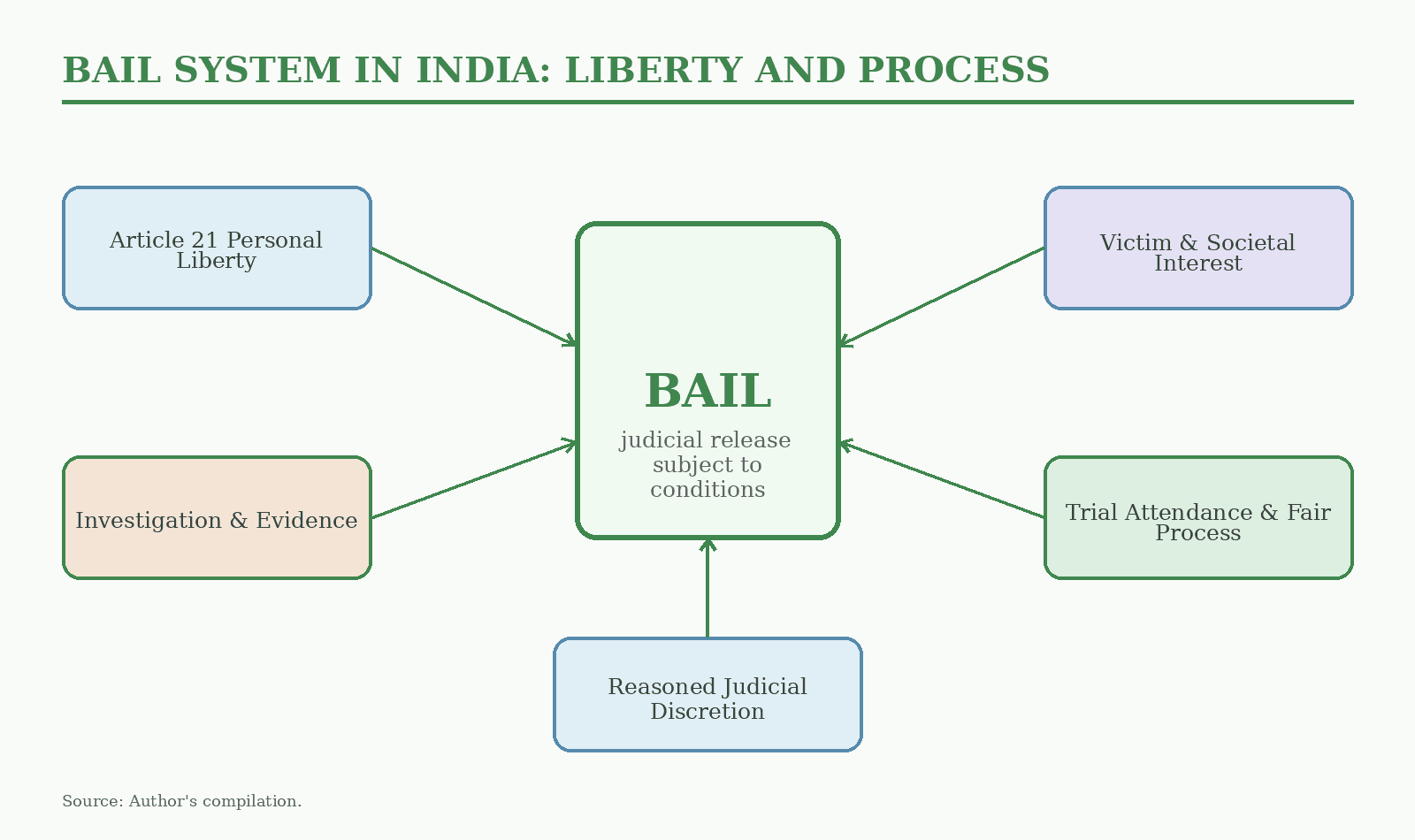
Figure 1: Bail system as a balance between personal liberty and criminal process. Source: Author's compilation.
II. MEANING AND CONSTITUTIONAL PHILOSOPHY OF BAIL
In ordinary legal understanding, bail means conditional release from custody. It is not an acquittal, nor is it a final determination of innocence. It is a provisional order that allows the accused to remain outside custody while the criminal process continues. The BNSS definition is significant because it recognises both bond and bail bond: a bond may be a personal undertaking without surety, whereas a bail bond normally involves surety. This distinction is important for poor accused persons because the insistence on surety can convert a release order into continued imprisonment.
The constitutional foundation of bail flows mainly from Article 21, which protects life and personal liberty except according to procedure established by law. After Maneka Gandhi, such procedure must be fair, just and reasonable. Pre-trial detention that is unnecessary, disproportionate or based on mechanical reasoning is therefore constitutionally suspect. Article 22 further requires safeguards after arrest, including information of grounds of arrest and production before a magistrate within twenty-four hours.
The Supreme Court has repeatedly emphasised that bail decisions must be guided by liberty, proportionality and fairness. In State of Rajasthan v. Balchand, the Court expressed the famous principle that bail is the rule and jail is the exception. In Gudikanti Narasimhulu, Justice V.R. Krishna Iyer described bail jurisdiction as a synthesis of personal liberty, public justice and the integrity of the criminal process. These decisions shifted bail from a purely discretionary privilege to a constitutional safeguard.
The decision in Moti Ram is especially relevant to the socio-economic reality of bail. The Supreme Court criticised excessive bond amounts and narrow local surety requirements. The Court recognised that bail conditions must not be so onerous that liberty becomes available only to the economically secure. This is the reason why modern bail reform must focus not only on grant of bail but also on the affordability and practicability of bail conditions.
Therefore, the philosophy of bail in India rests on four principles. First, arrest and custody are not automatic consequences of accusation. Secondly, the seriousness of the charge is relevant but not conclusive. Thirdly, the court must examine risks such as flight, tampering with evidence, threat to witnesses and repetition of offences. Fourthly, the conditions of release must be proportionate to the accused person and the case. When these principles are ignored, bail law becomes a source of inequality.
III. STATUTORY FRAMEWORK UNDER THE BNSS
The BNSS retains the basic architecture of Indian bail law while introducing important changes in terminology, undertrial review and procedural responsibilities. The distinction between bailable and non-bailable offences remains central. In bailable offences, release is a matter of right once the accused is prepared to give bail or execute a bond. In non-bailable offences, the court or officer must exercise discretion in accordance with statutory restrictions, constitutional standards and judicial precedents.
Section 478 BNSS deals with bail in bailable offences. It requires that a person other than one accused of a non-bailable offence shall be released on bail if prepared to furnish bail. The provision also recognises indigence: if the person is indigent and unable to furnish surety, the officer or court may, and in appropriate cases shall, discharge him on execution of a bond for appearance. The explanation creates a presumption of indigence where the person is unable to furnish bail bond within one week of arrest.
Section 480 BNSS governs bail in non-bailable offences before courts other than the High Court and Court of Session. It restricts release where reasonable grounds exist for believing that the accused is guilty of an offence punishable with death or imprisonment for life, subject to exceptions such as child, woman, sick or infirm persons. It also requires reasons to be recorded and permits conditions relating to attendance, non-repetition of offence and non-tampering with evidence.
Section 482 BNSS deals with anticipatory bail, which is a direction that a person apprehending arrest for a non-bailable offence shall be released on bail in the event of arrest. This provision is a major protection against arbitrary or politically motivated arrest. The power is vested in the High Court and Court of Session. Conditions may be imposed to secure cooperation with investigation and prevent interference with evidence or witnesses.
Section 483 BNSS confers special bail powers on the High Court and Court of Session. It permits these courts to release a person in custody on bail, set aside or modify conditions imposed by a magistrate, and cancel bail by directing arrest and committal to custody. This provision is significant because it gives superior criminal courts a corrective and supervisory role in bail administration.
The BNSS also contains provisions on the amount of bond, sureties, deposit instead of recognizance, forfeiture and discharge from custody. Section 484 states that the amount of every bond must be fixed with due regard to the circumstances of the case and must not be excessive. This is a statutory expression of the principle in Moti Ram: bail must not be made impossible by financial conditions.
Table 1: Principal Statutory Provisions on Bail under BNSS, 2023
Provision | Subject | Legal Significance |
s. 2(1)(b)-(e) | Definitions of bail, bailable offence, bail bond and bond | Clarifies that release may be on bond or bail bond, enabling personal bond-based release. |
s. 478 | Bail in bailable offences | Creates a right to release and recognises indigence where surety cannot be furnished. |
s. 479 | Maximum undertrial detention | Provides bail after one-half of maximum sentence and bond after one-third for first-time offenders, subject to exclusions. |
s. 187(3) | Default/statutory bail | Requires release if investigation is not completed within sixty or ninety days and the accused is prepared to furnish bail. |
s. 480 | Non-bailable offences | Confers discretion subject to restrictions, reasons and conditions. |
s. 482 | Anticipatory bail | Protects a person apprehending arrest in a non-bailable case. |
s. 483 | High Court and Sessions powers | Enables superior courts to grant, modify or cancel bail. |
Source: Author's compilation based on the Bharatiya Nagarik Suraksha Sanhita, 2023.
IV. TYPES OF BAIL AND PROCEDURAL PATHWAY
Indian bail practice may be understood through five broad categories: bail in bailable offences, regular bail in non-bailable offences, anticipatory bail, default or statutory bail, and bail or bond for prolonged undertrial detention. These categories overlap in practice but serve different legal purposes. A clear understanding of these types is necessary because confusion between them often leads to unnecessary custody.
Bail in bailable offences is a right. Once the offence is bailable and the accused is prepared to comply with lawful conditions, the officer or court has no broad discretion to deny release. The real problem in bailable cases is not legal entitlement but the practical burden of bond and surety. The BNSS attempt to recognise indigence is therefore important, but its success depends on police stations and magistrates using personal bonds instead of insisting mechanically on local sureties.
Regular bail in non-bailable offences is discretionary. The court considers the nature of accusation, severity of punishment, material collected during investigation, possibility of absconding, likelihood of tampering with evidence, threat to witnesses, antecedents and length of custody. However, discretion does not mean arbitrariness. The order must show application of mind and reasons. Where investigation is substantially complete and trial is likely to take time, continued detention must be justified by concrete risks, not by the gravity of allegation alone.
Anticipatory bail is pre-arrest protection. In Gurbaksh Singh Sibbia, the Supreme Court held that the power should not be confined by rigid limitations beyond those contained in the statute. In Sushila Aggarwal, the Court clarified that anticipatory bail need not be limited in time unless specific circumstances justify such limitation. The modern approach therefore treats anticipatory bail as a meaningful protection of liberty rather than a temporary procedural concession.
Default bail is different from ordinary bail. It arises because the investigating agency fails to complete investigation and file the required report within the statutory period. Section 187(3) BNSS continues the sixty-day and ninety-day framework and provides release if the accused is prepared to furnish bail. The Supreme Court has treated this right as a valuable statutory right linked to personal liberty.
Section 479 BNSS is a distinct undertrial safeguard. It requires release where a person has undergone one-half of the maximum prescribed imprisonment, except for offences punishable with death or life imprisonment. It also introduces a beneficial one-third rule for first-time offenders, who are to be released on bond after undergoing one-third of the maximum period. The prison superintendent has a statutory duty to move the court when the relevant period is completed.
The practical pathway of bail should therefore begin before arrest. Police must justify arrest, magistrates must scrutinise remand, courts must decide bail expeditiously, and prisons must identify eligible undertrials. When any one of these stages fails, the constitutional promise of personal liberty is weakened.
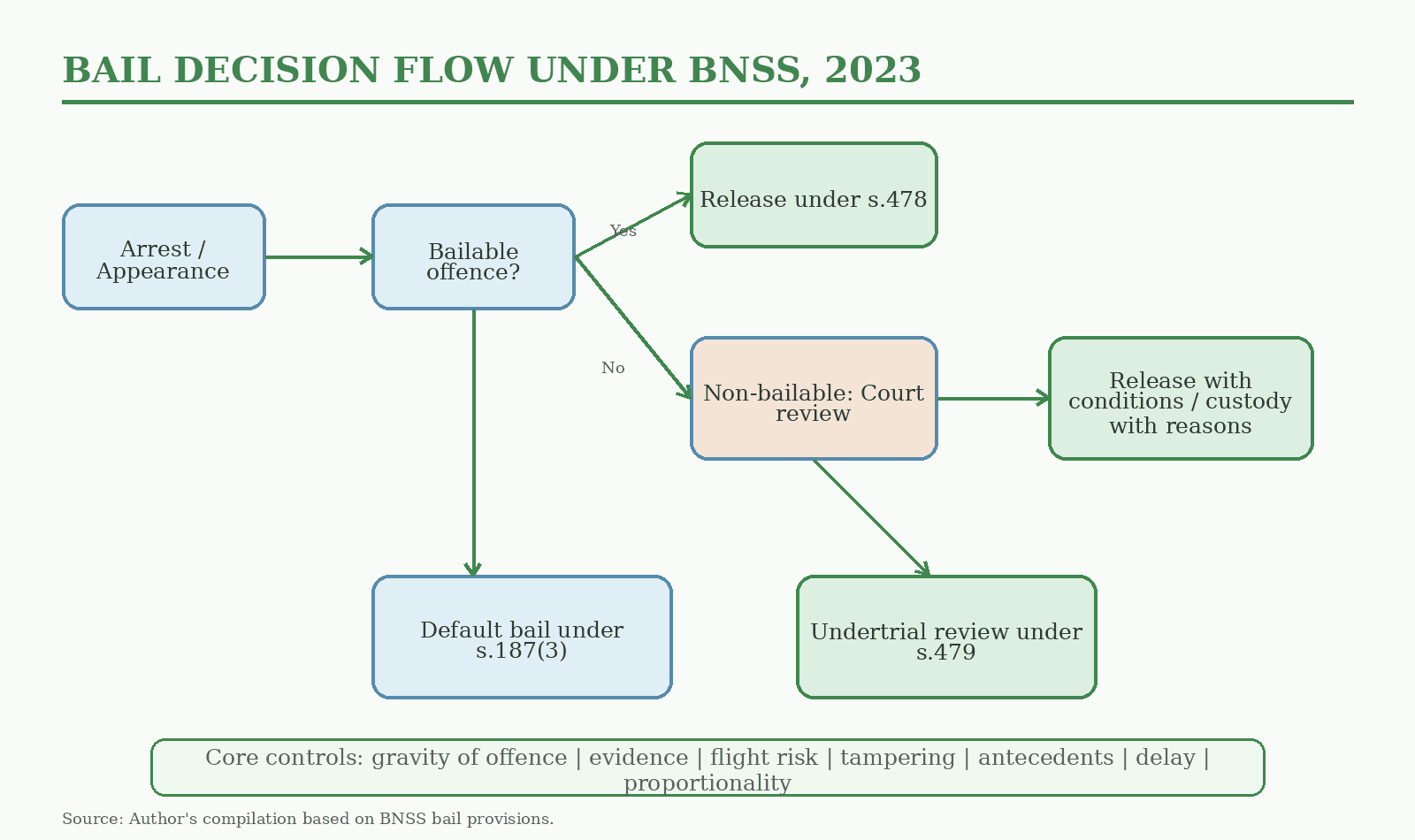
Figure 2: Bail decision flow under the BNSS. Source: Author's compilation based on statutory provisions.
V. JUDICIAL PRINCIPLES AND LANDMARK CASE LAW
Indian bail jurisprudence has been shaped substantially by judicial decisions. The courts have not treated bail as a narrow procedural issue; they have linked it with constitutional morality, dignity, access to justice and the prevention of arbitrary State action. The earliest modern line of cases established that imprisonment before conviction must be exceptional and based on necessity.
In Hussainara Khatoon, the Supreme Court confronted the problem of large numbers of undertrial prisoners languishing in jails for periods longer than the maximum punishment for their alleged offences. The case constitutionalised speedy trial and exposed the social injustice of undertrial detention. It remains a foundational precedent for connecting bail, legal aid and speedy justice.
In Babu Singh and later in Sanjay Chandra, the Court emphasised that the object of bail is to secure appearance at trial and not to punish the accused. Economic offences may be serious, but seriousness alone cannot justify indefinite custody when evidence is documentary, investigation is complete and the accused can be controlled through conditions. This reasoning is important in contemporary white-collar and corruption cases.
Arnesh Kumar addressed the problem of unnecessary arrest in offences punishable with imprisonment up to seven years. The Court directed police officers to apply statutory arrest criteria and required magistrates to examine whether arrest was necessary before authorising detention. Although Arnesh Kumar concerns arrest, its connection with bail is direct: preventing unnecessary arrest reduces the pressure on bail courts and prisons.
Satender Kumar Antil is one of the most significant recent decisions on bail administration. The Supreme Court created categories of offences and emphasised that arrest should not be mechanical where the accused has cooperated with investigation. The decision also highlighted the need for compliance with arrest safeguards and timely consideration of bail after filing of charge-sheet.
The jurisprudence on anticipatory bail also shows a strong liberty orientation. Gurbaksh Singh Sibbia rejected a narrow reading of anticipatory bail and held that the discretion must be exercised according to facts. Sushila Aggarwal later clarified that an anticipatory bail order ordinarily need not end when the accused is summoned or when the charge-sheet is filed, unless the court imposes a specific limitation for valid reasons.
The courts have also had to deal with special statutes that impose stringent bail conditions. In K.A. Najeeb, the Supreme Court held that constitutional courts can grant bail where prolonged incarceration and delayed trial make continued detention incompatible with Article 21, even under a statute like UAPA. In Jalaluddin Khan, the Court reaffirmed that even where statutes impose stricter conditions, the principle that bail is the rule remains relevant once those statutory conditions are satisfied.
Table 2: Selected Bail Decisions and Governing Principles
Case | Principle | Practical Relevance |
State of Rajasthan v. Balchand | Bail is the rule; jail is the exception. | Custody must be justified by necessity, not routine practice. |
Moti Ram v. State of M.P. | Bail amount and surety conditions must not be excessive. | Protects poor accused persons from paper bail. |
Gurbaksh Singh Sibbia | Anticipatory bail discretion should not be cut down by rigid rules. | Allows protection from arbitrary arrest. |
Arnesh Kumar | Arrest in offences up to seven years must satisfy necessity criteria. | Reduces unnecessary remand and custody. |
Satender Kumar Antil | Bail categories and arrest-compliance guidelines. | Promotes structured and timely bail decisions. |
K.A. Najeeb | Article 21 can justify bail where trial is delayed despite stringent statute. | Prevents special laws from causing indefinite pre-trial custody. |
Source: Author's compilation based on Supreme Court decisions.
VI. BAIL UNDER SPECIAL STATUTES: STRICT CONDITIONS AND CONSTITUTIONAL LIMITS
A complete study of bail in India must examine special statutes. In ordinary criminal law, the court balances liberty and risks through judicial discretion. Special statutes, however, often reverse the ordinary approach by requiring the court to be satisfied that the accused is not guilty, or by imposing a prima facie test that makes release difficult. These provisions are justified by the seriousness of offences such as terrorism, narcotic trafficking and money laundering, but they also create the risk of prolonged pre-trial incarceration.
Section 37 of the NDPS Act contains twin conditions for bail in serious narcotic offences. The court must give the public prosecutor an opportunity of being heard and must be satisfied that there are reasonable grounds for believing that the accused is not guilty and is not likely to commit an offence while on bail. This provision has made bail in NDPS cases substantially harder, especially where commercial quantity is alleged.
Section 43D(5) of the UAPA restricts bail where the court, on perusal of the case diary or police report, is of the opinion that there are reasonable grounds for believing that the accusation is prima facie true. In Watali, the Supreme Court interpreted this standard strictly and warned courts against detailed evaluation of evidence at the bail stage. Later decisions, however, have attempted to prevent this standard from becoming an instrument of indefinite imprisonment.
The PMLA also contains twin conditions under Section 45. The constitutional debate around PMLA bail demonstrates the tension between economic offence control and liberty. While the State has a legitimate interest in preventing money laundering, bail conditions must not produce custody that is excessive in relation to the likely sentence or the pace of trial.
The constitutional limit on special statutes is Article 21. K.A. Najeeb shows that long incarceration and the impossibility of an early trial can justify bail despite statutory rigour. Mohd. Muslim similarly reflects the judicial concern that strict bail provisions should not be read so literally that bail becomes practically impossible. These cases do not erase special statutory conditions; they ensure that those conditions are applied in a manner consistent with constitutional liberty.
The introduction of Section 479 BNSS also affects special-statute practice in cases where the provision is applicable. In Badshah Majid Malik, the Supreme Court applied the first proviso of Section 479 BNSS and ordered bail where the accused was a first-time offender and had undergone more than one-third of the maximum sentence for the scheduled offence. This illustrates the growing role of custody duration as a constitutional and statutory factor in bail adjudication.
VII. LAW AND PRACTICE: UNDERTRIALS, SURETIES AND DELAY
The greatest weakness of the bail system is the gap between legal principle and prison reality. India has a very large undertrial population. According to Prison Statistics India 2023, Indian prisons housed 5,30,333 inmates against an authorised capacity of 4,39,119, an occupancy rate of 120.8 per cent. Undertrial prisoners numbered 3,89,910, constituting about 73.5 per cent of the prison population. These figures show that bail and speedy trial are not technical issues; they are central to prison decongestion and human rights.
Undertrial detention often affects the poor disproportionately. A person with financial resources can engage counsel, file successive applications, arrange sureties and comply with conditions. A poor accused may not know the status of the case, may lack family support, may be unable to furnish local surety, and may remain in jail even after bail is granted. Such detention is not caused by conviction but by poverty and procedure.
Surety practice is a major barrier. Courts sometimes require local sureties, property documents, salary certificates or bond amounts unrelated to the accused person’s financial capacity. This is inconsistent with the spirit of Section 484 BNSS and the Supreme Court’s reasoning in Moti Ram. Personal bonds, appearance undertakings, mobile number verification, address verification and proportionate reporting conditions can often secure attendance without unnecessary financial burden.
Delay in hearing bail applications also undermines liberty. When bail applications are listed after long intervals, adjourned repeatedly, or decided through brief formulaic orders, the remedy loses value. Bail orders should be reasoned but not delayed. Courts must record specific grounds such as flight risk, tampering or threat to witnesses when denying bail. Generic statements about seriousness of offence are insufficient where custody is prolonged and investigation is substantially complete.
Arrest practice is another concern. Arrest is sometimes used as a default investigative step even where notice and cooperation would suffice. D.K. Basu established safeguards against custodial abuse, while Arnesh Kumar later created operational duties for police and magistrates. These safeguards are part of the bail ecosystem: unlawful or unnecessary arrest increases remand and forces accused persons into bail litigation that could have been avoided.
Section 479 BNSS attempts to address prolonged undertrial detention through a measurable custody threshold and by imposing a duty on prison superintendents. The Ministry of Home Affairs has also emphasised implementation of this provision for relief to prolonged undertrial prisoners. The effectiveness of this reform will depend on digital custody records, automatic identification of eligible prisoners, legal aid coordination and prompt judicial orders.
Table 3: Prison and Undertrial Indicators in India, 2023
Indicator | Reported Figure | Relevance to Bail System |
Authorised prison capacity | 4,39,119 | Shows the institutional limit of incarceration. |
Total inmates | 5,30,333 | Indicates overcrowding pressure on prisons. |
Occupancy rate | 120.8% | Demonstrates the cost of excessive pre-trial custody. |
Undertrial prisoners | 3,89,910 | Shows that most prisoners have not been convicted. |
Share of undertrials | 73.5% | Highlights bail and speedy trial as systemic priorities. |
Source: National Crime Records Bureau, Prison Statistics India 2023.
VIII. COMPARATIVE AND POLICY LESSONS
The Indian bail system can also be examined in the light of international human rights standards. Article 9(3) of the International Covenant on Civil and Political Rights provides that it shall not be the general rule that persons awaiting trial shall be detained in custody, although release may be subject to guarantees to appear for trial. This standard is consistent with Indian constitutional law because it treats detention as an exception and recognises that appearance can be secured through conditions rather than custody.
The Tokyo Rules similarly encourage wider use of non-custodial measures at the pre-trial stage. Their policy logic is simple: detention before conviction should be used only when necessary, and legal systems should adopt alternatives that protect society without causing unnecessary social and economic damage to the accused, family and community. In the Indian context, this supports personal bonds, reporting conditions, travel restrictions and victim-protection directions as alternatives to jail.
Comparative systems also show that bail reform cannot be limited to courts alone. Pre-trial services, risk assessment, supervised release and legal aid support are administrative mechanisms that assist courts in making better decisions. India need not mechanically import foreign risk-assessment models, especially where algorithmic tools may reproduce social bias. However, it can adopt the institutional idea that judges require reliable information about residence, employment, family support, antecedents, custody period and witness-risk before deciding bail.
Policy reform must therefore move from money-based bail to risk-based and rights-based bail. Money bail assumes that financial security ensures appearance, but it often detains the poor and releases the wealthy. A better approach asks whether the accused is likely to abscond, obstruct justice or endanger witnesses, and then imposes the least restrictive condition sufficient to manage that risk. This approach is closer to Article 21 because it links custody with necessity rather than economic capacity.
Victim protection must also be integrated into bail practice. A liberal bail system does not ignore victims. In offences involving violence, sexual offences, organised crime or intimidation, courts may impose non-contact conditions, residence restrictions, witness-protection directions and reporting obligations. The important point is that victim safety should be addressed through specific and enforceable conditions rather than through routine denial of bail in every serious case.
Another policy lesson concerns data. Bail reform cannot be measured without data on arrest, remand, bail applications, bail grants, rejection reasons, bond amounts, surety delays, release-after-bail time and re-arrest rates. District-level bail dashboards could help High Courts identify courts where remand is excessive, surety verification is delayed or Section 479 applications are not filed. Data would also make undertrial review committees more effective.
Finally, bail must be linked with speedy trial. Release on bail is not a substitute for trial; it is a safeguard against unjustified custody while trial proceeds. If the State wishes to oppose bail on the ground of seriousness, it must also demonstrate capacity to conduct the trial within a reasonable time. The stronger the prosecution objection to liberty, the stronger should be the institutional obligation to avoid delay.
Table 4: Practice Problems and Reform Responses in Bail Administration
Practice Problem | Effect on Accused / System | Suggested Reform |
Mechanical arrest | Unnecessary remand and avoidable bail litigation | Strict compliance with arrest reasons and magistrate scrutiny. |
High surety or local surety insistence | Paper bail; poor accused remain in jail | Personal bonds and financial-capacity based conditions. |
Delayed bail hearing | Custody becomes punishment before conviction | Time-bound listing and short reasoned orders. |
Weak legal aid follow-up | Eligible prisoners fail to apply or cannot complete release formalities | Prison legal aid clinics and LADCS monitoring. |
No custody-period alerts | Section 479 benefits not activated on time | Digital dashboards and automatic jail-superintendent applications. |
Source: Author's compilation.
IX. IMPLEMENTATION CHALLENGES
The first challenge is excessive dependence on arrest. Even though the law recognises that arrest is not compulsory in every cognizable case, police practice may still treat arrest as proof of investigation. Such practice shifts the burden to courts and prisons. Effective bail reform must begin with arrest reform: written reasons, notice of appearance, supervisory review and magistrate scrutiny must be enforced in substance.
The second challenge is inconsistency in bail orders. Similar cases may receive different outcomes depending on the court, the counsel, the local practice or the perceived seriousness of the offence. Judicial discretion is necessary because bail is fact-sensitive, but discretion must be structured by reasons. Reasoned orders promote transparency, appellate review and public confidence.
The third challenge is the poverty of the accused. Bail that requires cash, property or multiple sureties may be easy for one person and impossible for another. Equality under criminal procedure requires courts to assess the financial capacity of the accused. Personal bonds should be used more frequently where the risk of absconding is low and the accused has roots in the community.
The fourth challenge is delay in trial. When trials involve large numbers of witnesses, repeated adjournments and slow forensic reports, custody becomes punishment. The constitutional response cannot be to keep undertrials in jail until the system becomes efficient. Where trial delay is not attributable to the accused, bail becomes a necessary remedy for preserving Article 21.
The fifth challenge is special statutes. Stringent bail clauses may be necessary in some categories, but they should not be interpreted mechanically. Courts must examine the statutory threshold carefully while also considering custody duration, possibility of early trial, age, health and proportionality. A strict statute cannot authorise endless pre-trial incarceration.
The sixth challenge is weak legal aid. Legal services authorities and Legal Aid Defence Counsel Systems can transform bail practice if they function inside prisons, identify eligible prisoners, file applications promptly and follow up after release orders. Legal aid must include practical assistance for furnishing bonds, contacting families and verifying addresses.
The seventh challenge is post-bail compliance. Bail conditions should secure attendance, not create traps for cancellation. Conditions such as surrender of passport, periodic appearance, non-contact with witnesses and cooperation with investigation may be appropriate. However, excessive reporting, distant police station attendance or unrealistic surety requirements can make bail illusory.
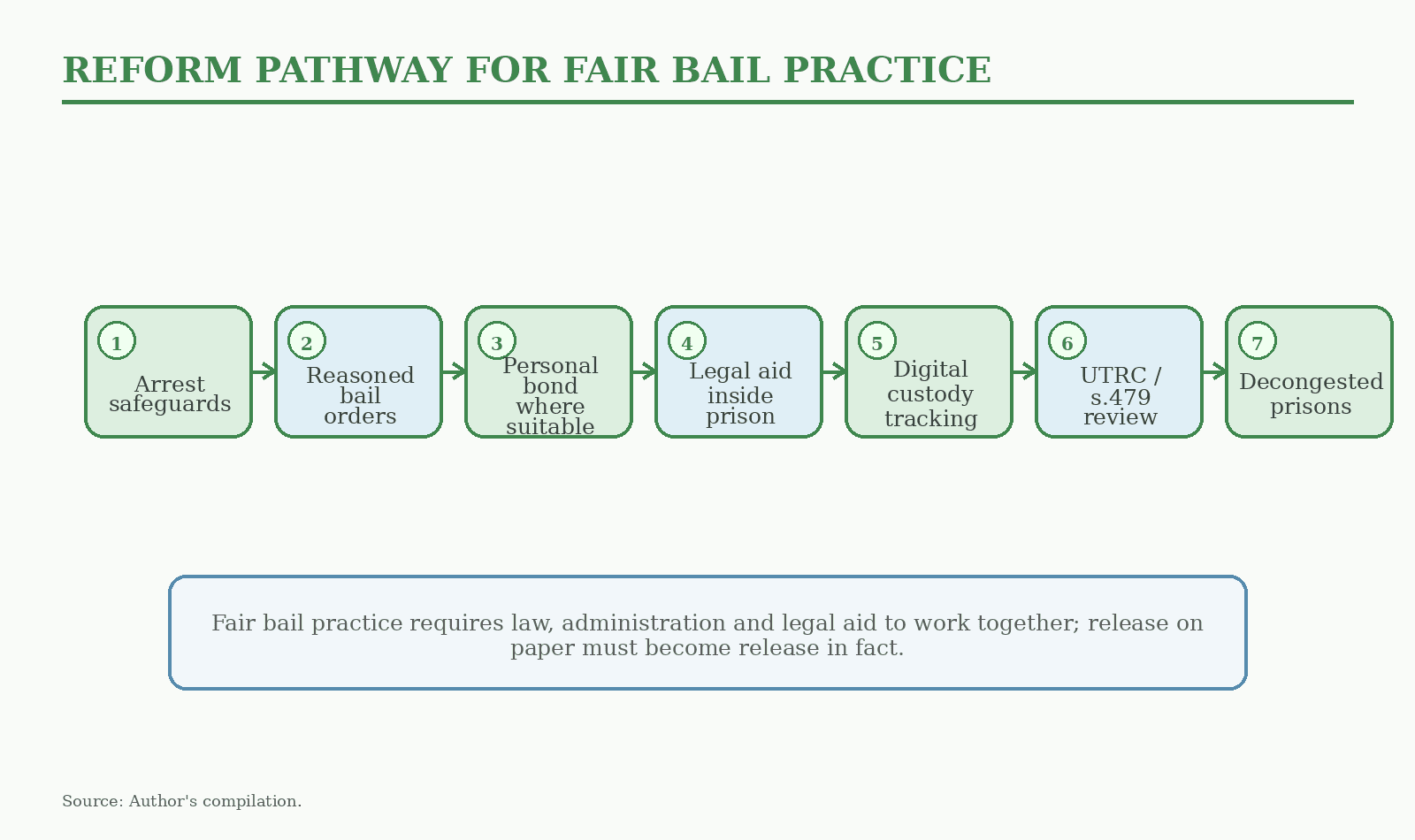
Figure 3: Reform pathway for fair bail practice. Source: Author's compilation.
X. CONCLUSION AND SUGGESTIONS
The bail system in India is built upon a strong constitutional foundation. Article 21, the presumption of innocence, the right to speedy trial and the Supreme Court’s liberty-oriented jurisprudence all support the proposition that pre-trial detention must be exceptional. The BNSS continues and modernises the statutory framework by defining bail, recognising personal bonds, preserving anticipatory bail, providing default bail and strengthening undertrial review through Section 479.
However, the practical functioning of bail still requires serious reform. The first suggestion is strict enforcement of arrest safeguards. Police officers must record reasons for arrest, issue notices where arrest is not necessary, and avoid custodial action merely because an offence is cognizable. Magistrates must examine the legality and necessity of arrest before authorising remand.
Secondly, bail orders must be reasoned and timely. Courts should avoid formulaic orders that merely reproduce allegations. A denial of bail should identify specific risks such as absconding, tampering, witness intimidation or repetition of offence. Where those risks can be controlled through conditions, release should be preferred.
Thirdly, personal bond-based release should be expanded. Section 478 and Section 484 BNSS provide a statutory basis for non-excessive bail and recognition of indigence. Courts should consider personal bonds, verified addresses, undertakings, digital reminders and proportionate reporting conditions before requiring sureties or high monetary bonds.
Fourthly, Section 479 BNSS should be implemented through automatic digital triggers. Prison databases should calculate custody periods and generate alerts for one-third and one-half thresholds. Jail superintendents should be accountable for filing applications, and district legal services authorities should monitor compliance through undertrial review committees.
Fifthly, special statute bail should be harmonised with Article 21. Courts must respect statutory restrictions, but they should also prevent prolonged incarceration where the trial is unlikely to conclude within a reasonable time. The constitutional court’s role is to ensure that stringent conditions do not become a substitute for conviction.
Sixthly, legal aid should be treated as part of the bail process, not as an external welfare measure. Effective bail requires counsel, documentation, family contact, surety assistance and follow-up after the order. Legal aid clinics inside prisons and Legal Aid Defence Counsel Systems should prepare periodic lists of eligible prisoners, especially first-time offenders under Section 479.
Lastly, bail reform must be understood as criminal justice reform. Decongestion of prisons, reduction of unnecessary arrests, fair trial, protection of victims and public confidence are interconnected. A fair bail system does not mean automatic release in every case; it means reasoned, proportionate and equal decision-making. The law in India already contains many principles needed for such a system. The urgent task is to convert those principles into everyday practice so that liberty does not depend on wealth, influence or chance.
Bail training should be institutionalised for police officers, prosecutors, magistrates, legal aid lawyers and prison officials. The training should not be limited to statutory sections; it should include practical problems such as surety verification, bond reduction, drafting of release warrants, communication with families and use of digital custody records. The same training should emphasise that every day of unnecessary custody is a constitutional harm.
High Courts may consider issuing model bail order formats that require courts to record the key factors considered. Such formats should not make decision-making mechanical, but they can ensure that relevant questions are not missed: whether arrest was necessary, whether investigation is complete, whether the accused has roots in the community, whether witnesses are vulnerable, whether conditions can control risk, and whether custody has become disproportionate.
District Legal Services Authorities should prepare monthly bail audits in coordination with prisons. These audits should identify prisoners who have not filed bail applications, prisoners who have been granted bail but not released, first-time offenders eligible under Section 479, women prisoners, sick or infirm prisoners and prisoners whose trials have not progressed. Bail reform will succeed only when eligible persons are actively identified instead of waiting for them to navigate the system alone.
Finally, public confidence in bail depends on transparency. When courts grant bail with clear conditions and reasons, society can understand that bail is not acquittal and does not prevent prosecution. When courts deny bail with specific reasons, the accused and appellate courts can examine whether detention is justified. Reasoned transparency protects both liberty and the legitimacy of criminal justice.
In conclusion, bail remains the most practical constitutional instrument for preventing pre-trial punishment. The Indian Supreme Court has repeatedly reminded that liberty is the norm and detention before conviction is an exception. The BNSS provides a renewed statutory opportunity to make this principle operational through personal bonds, default bail, undertrial review and reasoned bail discretion. If courts, police, prisons and legal aid institutions work together, the bail system can protect both individual liberty and the integrity of criminal justice.
XI. REFERENCE:
Dr. Parvinder Kaur, Supervisor, Gurkirat Pal Singh, Assistant Professor, University School of Law, Rayar Bahra University, Mohali.
*Gurkirat Pal Singh, University School of Law, Rayar Bahra University, Mohali; UID/Registration No.: 25072001049; Email: gurkiratpalsingh2000@gmail.com
The Constitution of India, arts. 21 and 22.
The Bharatiya Nagarik Suraksha Sanhita, 2023 (Act 46 of 2023), s. 2(1)(b)-(e).
Id., Chapter XXXV, ss. 478-496.
Law Commission of India, 268th Report, Amendments to Criminal Procedure Code, 1973 – Provisions Relating to Bail (May 2017).
The Bharatiya Nagarik Suraksha Sanhita, 2023 (Act 46 of 2023), s. 2(1)(b)-(e).
Maneka Gandhi v. Union of India, (1978) 1 SCC 248.
State of Rajasthan v. Balchand, (1977) 4 SCC 308.
Moti Ram v. State of M.P., (1978) 4 SCC 47.
The Bharatiya Nagarik Suraksha Sanhita, 2023, s. 478.
The Bharatiya Nagarik Suraksha Sanhita, 2023, s. 478.
Id., s. 480.
Id., s. 482.
Id., s. 483.
Id., ss. 484-490.
The Bharatiya Nagarik Suraksha Sanhita, 2023, s. 478.
Sanjay Chandra v. CBI, (2012) 1 SCC 40.
Gurbaksh Singh Sibbia v. State of Punjab, (1980) 2 SCC 565.
Rakesh Kumar Paul v. State of Assam, (2017) 15 SCC 67.
The Bharatiya Nagarik Suraksha Sanhita, 2023, s. 187(3).
Id., s. 479.
Arnesh Kumar v. State of Bihar, (2014) 8 SCC 273.
Gudikanti Narasimhulu v. Public Prosecutor, High Court of Andhra Pradesh, (1978) 1 SCC 240.
Hussainara Khatoon (I) v. Home Secretary, State of Bihar, (1980) 1 SCC 81.
Sanjay Chandra v. CBI, (2012) 1 SCC 40.
Arnesh Kumar v. State of Bihar, (2014) 8 SCC 273.
Satender Kumar Antil v. CBI, (2022) 10 SCC 51.
Sushila Aggarwal v. State (NCT of Delhi), (2020) 5 SCC 1.
Union of India v. K.A. Najeeb, (2021) 3 SCC 713.
The Narcotic Drugs and Psychotropic Substances Act, 1985 (Act 61 of 1985), s. 37.
National Investigation Agency v. Zahoor Ahmad Shah Watali, (2019) 5 SCC 1.
The Unlawful Activities (Prevention) Act, 1967 (Act 37 of 1967), s. 43D(5).
The Prevention of Money-Laundering Act, 2002 (Act 15 of 2003), s. 45.
Mohd. Muslim @ Hussain v. State (NCT of Delhi), 2023 SCC Online SC 352.
Badshah Majid Malik v. Directorate of Enforcement, SLP (Crl.) No. 10846 of 2024, order dated Oct. 18, 2024 (Supreme Court of India).
National Crime Records Bureau, Prison Statistics India 2023, Ministry of Home Affairs, Government of India, available at: https://www.ncrb.gov.in/uploads/files/PSI-2023.pdf (last visited on May 26, 2026).
Tata Institute of Social Sciences, Experiences of Undertrial Prisoners Released on Bail: A Socio-Legal Study (2023).
Moti Ram v. State of M.P., (1978) 4 SCC 47.
Satender Kumar Antil v. CBI, (2022) 10 SCC 51.
D.K. Basu v. State of West Bengal, (1997) 1 SCC 416.
Ministry of Home Affairs, Government of India, “Release of Prolonged Under-trial Prisoners”, Press Information Bureau, Apr. 2, 2025, available at: https://www.pib.gov.in/PressReleasePage.aspx?PRID=2117796 (last visited on May 26, 2026).
International Covenant on Civil and Political Rights, 1966, art. 9(3).
United Nations Standard Minimum Rules for Non-custodial Measures (The Tokyo Rules), G.A. Res. 45/110, U.N. Doc. A/RES/45/110 (Dec. 14, 1990).
Arnesh Kumar v. State of Bihar, (2014) 8 SCC 273.
Moti Ram v. State of M.P., (1978) 4 SCC 47.
Union of India v. K.A. Najeeb, (2021) 3 SCC 713.
Jalaluddin Khan v. Union of India, 2024 SCC Online SC 1945; 2024 INSC 604.
In Re: Inhuman Conditions in 1382 Prisons, (2016) 3 SCC 700; see also subsequent orders on undertrial review and prison decongestion.